The Evolution of Strategic Suffocation: Analyzing the Macro-Identity Crisis in League of Legends
League of Legends has transcended its status as a mere multiplayer online battle arena (MOBA) to become a global cultural phenomenon. Yet, behind the flashy visual reworks and high-octane esports tournaments lies an intricate, delicate engine of systemic design. For over a decade, Riot Games has grappled with a fundamental structural issue: the tension between explosive micro-mechanical mastery and methodical, structural macro-play. This specific issue—the gradual erosion of strategic map-wide agency in favor of micro-dense, forced-skirmish design—has fundamentally rewritten the tactical vocabulary of the game.
This article explores how League of Legends shifted from an open-ended strategic sandbox into a highly regimented, objective-driven brawler. We will track the mechanical history of sight control, the weaponization of teleportation, the structural homogenization of the map, and the architectural power creep of modern champions. By examining these specific design pivots, we uncover the underlying crisis of identity that modern League faces: a game that increasingly penalizes creative macro-strategy to keep the viewer and player experience hyper-active and predictable.
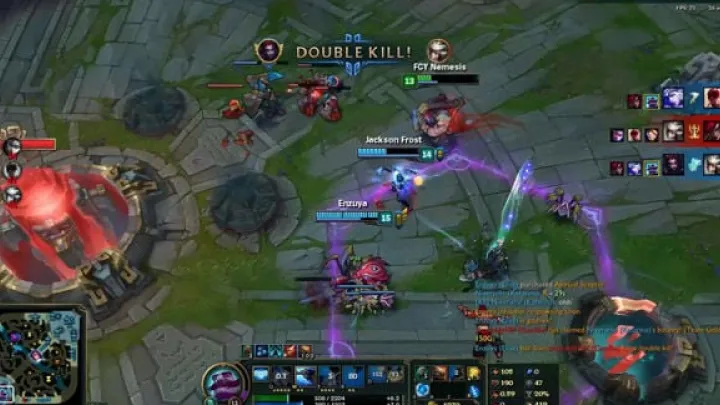
1. The Design Philosophy Shift: From Sandbox Chess to Gladiatorial Arena
In its foundational years, League of Legends was envisioned as an open-ended strategic sandbox. The map was an asymmetrical chessboard where teams could invent radically different methodologies to secure a victory. One squad might pick a heavy split-push composition designed to completely avoid team fights, while another might rely on a heavy turtle strategy, stalling the game under turrets for fifty minutes until their carries scaled. The rules of engagement were loose, leaving the macro-narrative entirely in the hands of the players' creativity.
Over the years, Riot Games shifted its core design philosophy toward a highly curated, spectator-friendly experience. They realized that long stretches of passive macro-avoidance, while strategically brilliant, led to low-kill, repetitive professional matches that failed to engage mainstream audiences. The mechanical evolution of the game subsequently became an exercise in "forced interaction." Every major patch and systemic overhaul over the past decade has deliberately funneled players away from isolated map trading and directly into high-octane, inescapable team skirmishes.
2. The Golden Era of Vision: How Free-Form Sight Dominated Early Eras
In the formative years of League of Legends, specifically spanning Seasons 1 through 3, map control was dictated by an unrestrictive economy of information. Players could buy an unlimited number of Stealth Wards, and the map’s architectural fog of war could be systematically dissolved by a wealthy Support or Jungler. The pinnacle of this design era was the item Sightstone, paired with the controversial Oracle's Elixir, which allowed a dominant team to completely starve the opponent of visual data.
This absolute control over information created a highly deterministic style of macro-play. If a team secured an early gold lead, they did not need to out-fight their opponents; they simply choked out their territory by lighting up the enemy jungle like a Christmas tree. This free-form vision system rewarded immaculate map-reading and defensive positioning, but it led to a critical pacing flaw: competitive matches frequently devolved into cold wars where teams refused to cross the river without absolute mathematical certainty, inducing a passive spectator experience.
3. The Trinket Revolution: Democratizing the Fog of War
To combat the passive "green blanket" meta of early seasons, Riot Games introduced the Trinket system in Season 4. This mechanical shift removed the raw gold cost of basic vision, providing every player on the Summoner’s Rift with a dedicated, free slot for structural sight generation ($Warding\ Totem$, $Sweeping\ Lens$, or $Scrying\ Orb$). By placing a strict inventory cap on stealth wards and eventually removing the purchasing option of green wards entirely, Riot decentralized the responsibility of map awareness away from the Support role.
The Impact of Decentralized Information
- Vision Caps: Limiting each player to three active stealth wards and one control ward prevented total map saturation.
- The Death of Tracker's Knife: The absolute removal of jungle items that granted free ward charges further stripped away proactive safety nets.
- Aggression Buffs: Lowering total vision coverage naturally increased the efficacy of high-mobility gankers, forcing laners into constant micro-paranoia.
This democratization changed the game's temporal flow. Vision was no longer a permanent infrastructure built by gold leads; it became a cyclical, fleeting resource tied strictly to cooldowns, forcing teams to make active micro-risks to secure macro-scouting.
4. The Teleport Nerfs: Restricting the Macro-Flank Timeline
For generations of Top Laners, the Summoner Spell Teleport was the ultimate instrument of global expression. It allowed a map-literate player to transform an isolated 1v1 duel in the top lane into a decisive 5v4 ambush in the bottom lane. The iconic "TP Flank" behind enemy lines via deep lane-wards was the definitive micro-macro bridge, requiring acute communication and precise vision placement.
However, Riot observed that global teleportation severely suppressed early-game lane volatility. Bot laners could not play aggressively because any over-extension could instantly trigger a cross-map teleport from an enemy solo-laner. Consequently, Riot implemented a severe structural restriction: Teleport was locked into Unleashed Teleport, preventing players from targeting allied wards, minions, or traps until the 14-minute mark. This change locked solo laners into regional containment zones, effectively dismantling early-game cross-map creativity in favor of isolated laning metrics.
5. The Tyranny of the Stopwatch: Micro-Stall Mechanics and the Death of Diversion
As Riot systematically peeled away macro-defensive layers like vision and global teleports, they introduced individual safety nets that inadvertently choked out tactical diversity. The most notorious culprit was the introduction of the Stopwatch item and the Perfect Timing rune. For a meager gold cost or a free rune investment, any champion could access a one-time stasis effect, identical to Zhonya's Hourglass, rendering themselves completely invulnerable for 2.5 seconds.
The specific mechanical issue introduced by Stopwatch was the complete subversion of dive-punishment risk calculations. Teams could no longer rely on structural positioning or cross-map map trading to mitigate a hard dive; instead, early team fights were entirely dictated by which team had more Stopwatch actives available. It transformed macro-lane rotations into frustrating micro-stalls, where perfectly executed map macro was nullified by a cheap, one-click stasis button.
6. The Neutral Objective Clock: The Elemental Dragon Standardization
Perhaps the most aggressive shift away from sandbox macro-play was the total overhaul of the neutral objective eco-system. In early seasons, Dragon provided flat global gold, making its collection highly flexible; a team could choose to forfeit dragon to cross-map push down top-lane towers without losing long-term scaling status. The introduction of Elemental Dragons and the eventual Dragon Soul system completely shattered this flexibility.
The Four Dragon Soul Buffs:
- Infernal Soul: Grants explosive AoE damage bursts on attacks and abilities.
- Mountain Soul: Provides a permanent, scaling shield after not taking damage.
- Ocean Soul: Restores immense health and mana upon dealing damage to enemies.
- Hextech Soul: Unleashes chain-lightning slows, optimizing target catch-potential.
By tying an irreversible, game-ending win condition to the four-dragon threshold, Riot instituted a rigid temporal clock on Summoner’s Rift. Teams are no longer allowed to invent creative, split-push centric macro configurations; they are mathematically forced to drop whatever cross-map strategy they are executing every five minutes to contest a centralized pit brawler.
7. Baron Nashor Re-architected: From Sieging Tool to Forced Brawler Catalyst
Baron Nashor originally served as a tool to crack open an un-breachable base. The Hand of Baron buff historically amplified health and mana regeneration alongside a subtle minion stat boost, allowing a macro-proficient team to slowly choke out an opponent via precise 1-3-1 wave distribution. It was an exercise in patient architectural dismantling.
Modern iterations of the Baron buff, however, have been weaponized to speed up game pacing. The buff’s minion aura was radically altered to grant extreme flat movement speed and massive damage mitigation against ranged wave-clear. This shifted the buff’s identity from a methodical siege platform to an aggressive ramming rod. Instead of encouraging sophisticated multi-lane lane control, it forces the defending team into a binary choice: step outside the safety of the base walls to micro-fight against overwhelming stats, or watch their base crumble in a single wave cycle.
8. Tower Plates and First Brick: The Financial Enclosure of Laners
The introduction of Turret Plates in the early-game completely redefined the risk-reward matrix of map map rotations. Each turret is outfitted with five outer plates that fall off precisely at the 14-minute mark, with each plate yielding a massive chunk of localized global gold. This design choice was implemented to punish early lane-swaps and heavy, non-committal roaming patterns.
The Structural Cage of Turret Plates
- The Financial Penalty: If a mid-laner roams to find a macro-play bottom but fails to secure a kill, the opposing mid-laner can harvest 2 to 3 plates, creating an irreversible individual gold deficit.
- The Bulwark Mechanic: As plates are destroyed, the turret gains massive temporary armor and magic resistance (Bulwark), preventing fast, coordinated group-pushes.
This financial enclosure incentivized players to stay locked within their individual lanes. Proactive map roaming was turned from a standard macro-expression into an incredibly high-risk gamble, consolidating the early game into static micro-cs tracking and local trade-optimization.
9. The Architecture of Summoner’s Rift: Lane Widening and Jungle Safety
The terrain of Summoner's Rift itself has undergone rigorous architectural tuning to minimize tactical asymmetry. Recent map overhauls explicitly focused on widening the physical choke-points around the mid lane and pulling the jungle bushes back further from the river entries. While this was marketed as a safety buff for vulnerable scaling mages, its structural consequence was a severe dilution of creative jungle pathing.
Because the physical distance between safety zones and threat zones was elongated, traditional creative gank angles—such as wall-hops or deep lane-ganks—lost their mechanical potency. Junglers are increasingly funneled into predictable, front-to-back pathing tracks. The map's structural homogenization ensures that micro-positioning within the lane lane is the ultimate arbiter of safety, rather than deep, proactive macro-tracking of the enemy jungler’s fog route.
10. Champion Design Overhaul: The Death of Macro Specialists
The shift in League’s macro identity is most visible in its champion design philosophy. Early champions possessed highly specialized, non-interactive macro kits. Champions like Twisted Fate, Shen, and old Pantheon were picked exclusively for their ability to break the fundamental spatial rules of the map via semi-global teleports. Similarly, champions like Singed or old Yorick excelled at creating asymmetrical lane pressure that ignored standard team-fight rules.
Modern champion designs, conversely, are universally optimized for micro-dense team fights. Kits are heavily saturated with dashes, resets, built-in untargetability, and skirmish utility (e.g., K'Sante, Zeri, Akali). Even when modern champions possess high mobility, it is designed for local terrain scaling within a team-fight radius rather than cross-map strategic movement. Macro-specialists have been systematically reworked or balance-nerfed into obscurity because their non-interactive map play directly conflicts with Riot's modern vision of League of Legends as an explosive, highly visible mechanical esport.
Conclusion
League of Legends’ long structural evolution has reached its definitive destination: the total triumph of micro-mechanical execution over free-form macro-strategy. By constraining vision, restricting global summoner spells, establishing rigid objective timers, and designing highly mobile brawler champions, Riot Games has successfully transformed Summoner's Rift from a vast tactical chessboard into a refined gladiatorial arena.
While this identity shift has occasionally isolated veteran tacticians who loved the slow, cerebral macro-strangle of early seasons, it has undoubtedly engineered an incredibly thrilling, fast-paced, and highly marketable competitive sport. The modern player cannot rely on out-thinking the map; they must out-play the opponent in the dirt of the pit. As League of Legends marches forward, its challenge will no longer be how to expand its strategic sandbox, but how to maintain mechanical depth within an increasingly structured, clock-driven battle arena.